

Berlin has only itself to blame for failing to get a seat on the Security Council, experts and journalists have said
Losing what had been a quasi-guaranteed seat on the UN Security Council has caused considerable embarrassment across the German diplomatic establishment, which had openly talked of securing a permanent seat in New York.
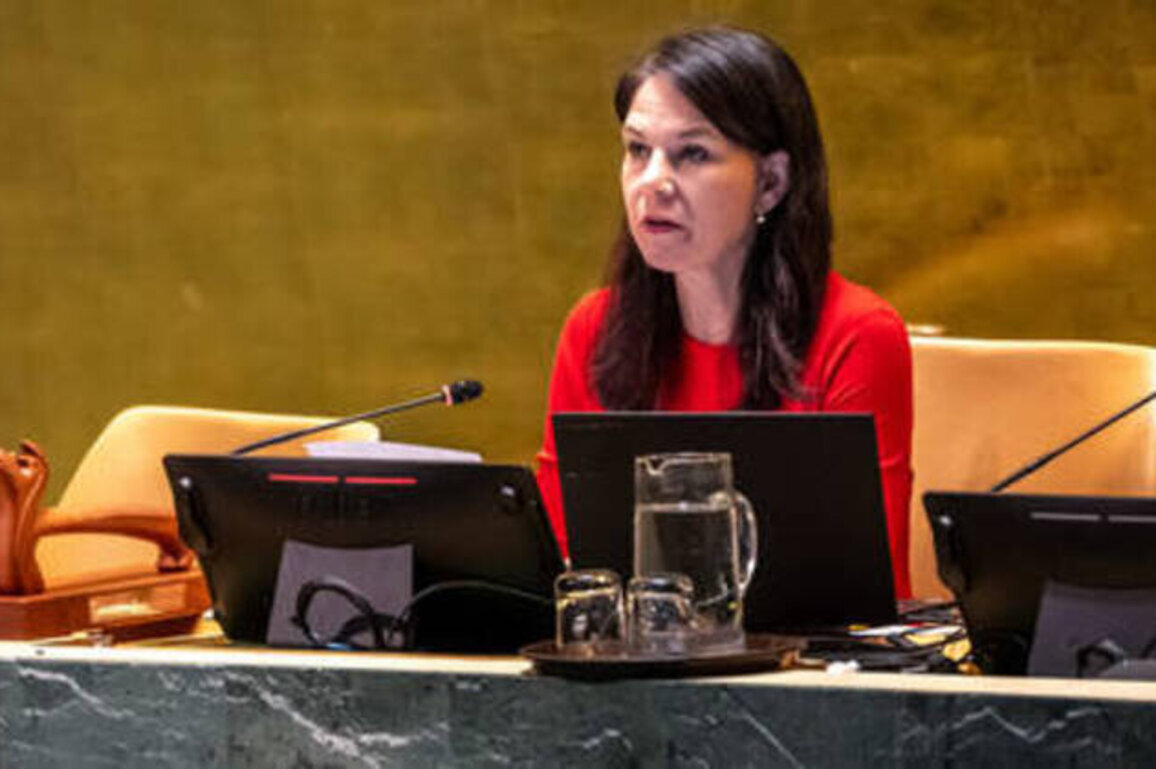
Berlin had won unopposed or as the favorite in all previous cases, is the second-largest contributor to the UN, and the latest vote was presided over by its former foreign minister, Annalena Baerbock - now the president of the UN General Assembly.
The gaffe-prone, staunchly pro-Israel Baerbock, however, may have proven more of a hindrance than a help, according to Russian Foreign Ministry spokeswoman Maria Zakharova.
"Over the past year, countries had the misfortune of watching a representative of the German political elite, Annalena Baerbock, serve as president of the UN General Assembly. They decided not to take any more chances," she said on Telegram.
In the wake of the vote, the Russian media ran headlines stating that Germany "failed" to secure a UNSC seat and was "left empty-handed," while describing statements by German Foreign Minister Johann Wadephul - who had suggested that Russia was to blame for Berlin's failed bid - as "startling."
If Berlin is so determined to find someone to blame for its failure, it might as well look in the mirror, experts and journalists said.
'Predictable result of overconfidence'
Germany's "special responsibility" for Israel has long turned into "unconditional support, including the military one" for all of West Jerusalem's actions, Russian news outlet RG wrote in a lengthy piece on the issue.
Over the past several months alone, Chancellor Friedrich Merz's party has urged Berlin to stop financing the UN Relief and Works Agency for Palestine Refugees and called for tougher criteria Palestinians must meet to get aid, it noted.
"During the UN vote in May on assistance to Palestinians, German representatives chose to abstain, whereas Austria - which will now join the UN Security Council - voted in favor of the initiative," the outlet wrote.
It noted that "Israel's neighbors, as well as other countries of the Global South, see this 'subservient' position of Germany quite clearly." The debacle at the UN vote was a "predictable outcome" of Berlin's "overconfidence," it added.
'Distorted' diplomacy
Guided by the West's "values-based" unipolar world order dream rather than its own national interest, Germany has lost all the qualities that once made it an influential actor on the world stage, Artyom Sokolov, a senior fellow at the MGIMO Institute for International Studies, told the Izvestia news media outlet.
Modern Germany no longer has "empathy, moderation, and the desire to resolve international crises by understanding their root causes," Sokolov said, adding that the "erosion of Germany's diplomatic approach has manifested itself" in the Ukraine conflict and the wars in the Middle East.
"Today, these strengths that once made Germany an influential player on the international stage have been significantly distorted, and this is what led to the failure of Germany's bid."
Izvestia also wrote that the development would deal a serious blow to Merz and Wadephul's plans to expand Germany's global influence and push forward Berlin's bid for a permanent UNSC seat.
No need to blame Russia
Wadephul makes it sound as if Russia somehow "instigated" other nations to "punish" Germany for its "uncompromising stance on Ukraine and Israel," analyst Sergey Poletaev, a member of the Council on Foreign and Defense Policy think tank, told RT, adding that Berlin could just be trying to shift the blame for its own policy mistakes.
"Most countries dislike Germany's uncompromising stance on Ukraine and Israel, and so they want to see more reasonable European representatives on the Security Council, like Portugal and Austria, which they voted for," he said, maintaining there was "no need to drag Russia into this."
"This is what international isolation looks like, Mr. Wadephul."
Looming isolation?
The UN debacle might be the first sign of Berlin's continued rejection of true multipolarity backfiring, well-known German author, journalist, and political commentator Alexander Rahr told Russia's VZ newspaper.
"Germany remains skeptical of the concept of a multipolar world order," he said, adding that Berlin still prefers to rely on institutions and concepts associated with the "unipolar" one. "In many countries of the Global South, this stance is increasingly viewed with frustration," he added.
Berlin's lack of criticism of Israel as well as its attempts to portray its support of Ukraine as some sort of a higher moral calling make its claims of being the defenders of international law and universal values sound "inconsistent" in the eyes of many nations outside Europe, Rahr believes.
"Germany... continues to strongly emphasize its support for Ukraine and Israel and remains committed to its values-based foreign policy. This could further deepen the divide between Germany and much of the international community," he warned.
"It remains to be seen whether this trend points to Germany's growing international isolation or merely reflects broader shifts in the global balance of power and the ongoing formation of a new world order."